 By
By 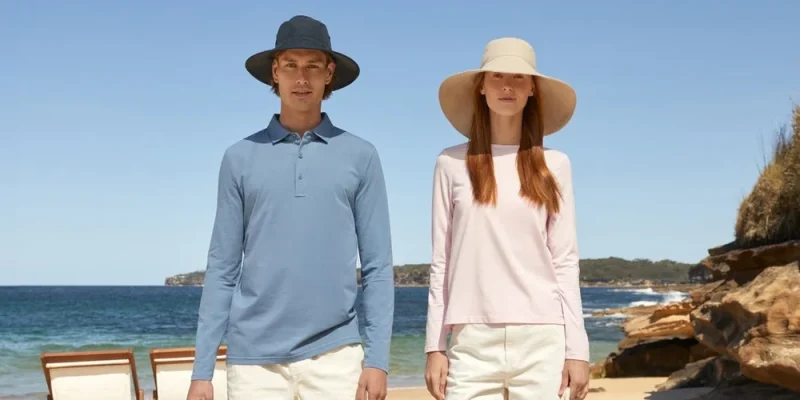
Sunscreen gets most of the attention in sun protection conversations, and it deserves some of it. But relying on sunscreen alone – especially in environments with intense, sustained UV exposure – is a strategy with real gaps. Application is rarely as thorough or as frequent as it needs to be. Sweat and water wash it off faster than most people account for. And certain areas of the body that are chronically underprotected, like the scalp, the tops of the ears, and the backs of the hands, get missed entirely in a typical application. A complete approach to sun protection uses clothing, hats, shade, and timing alongside sunscreen rather than treating it as the whole solution.
Understanding UPF Clothing
UPF – Ultraviolet Protection Factor – is the fabric equivalent of SPF. It measures how much UV radiation a fabric blocks. A UPF 50 fabric blocks 98 percent of UV rays, allowing just 2 percent to pass through. A regular white cotton t-shirt, by comparison, typically has a UPF of around 5 to 7 when dry and significantly less when wet.
The practical implication is that the clothing most people wear on sunny vacation days provides very little actual sun protection. A light linen shirt at the beach feels like coverage but isn’t functioning as meaningful UV protection.
UPF-rated clothing has improved dramatically over the past decade. The early versions were boxy, utilitarian, and obviously sun-protective in a way that didn’t suit most travelers. Current options from brands including Coolibar, Solbari, Columbia, and Patagonia include shirts, pants, swim tops, and coverups that look like normal clothing and perform as genuine protection. For a Caribbean cruise – where sustained UV exposure across multiple sea days and beach excursions accumulates faster than most travelers realize – building UPF clothing into the packing list is one of the higher-leverage investments in both comfort and long-term skin health.
The Hat Question
Not all hats are created equal for sun protection. A baseball cap protects the face and forehead but leaves the ears, the back of the neck, and the sides of the face largely exposed – the areas that accumulate the most sun damage in people who wear hats regularly because they assume they’re protected.
A wide-brimmed hat – at least three inches of brim all the way around – is the functional option for real sun protection. The brim angle matters as well: a flat brim provides more consistent shade than one that curves upward and allows afternoon sun to reach the face from the sides.
For water and beach environments, a hat that stays on in wind and dries quickly is more practical than one that looks good but requires a calm day to wear. Many sun-protective hats include a chin strap that can be deployed when needed and tucked away when not.
Straw hats are common in tropical environments and look appropriate but offer less UV protection than tightly woven fabric hats. The UPF rating of a hat, if it has one, is worth checking – a labeled UPF 50 hat from a reputable brand provides consistent protection; an unlabeled straw hat may or may not.
Timing and Shade as Strategy
The UV index peaks between 10 a.m. and 2 p.m. in most locations and is considerably higher in tropical and equatorial environments than at higher latitudes. Planning high-exposure activities – beach time, outdoor excursions, time on an open deck – for the morning before 10 or the afternoon after 3 meaningfully reduces cumulative UV exposure without requiring any additional products.
Shade is more protective than most people give it credit for, but it isn’t complete protection. UV radiation reflects off sand and water and reaches skin even under an umbrella – the reflectance from white sand can account for 15 to 20 percent of total UV exposure. Shade is genuinely useful, but assuming that sitting under an umbrella at a Caribbean beach provides full protection leads to burns that seem to arrive from nowhere.
Sunscreen: Using It Well Rather Than Using More of It
For the areas that clothing and hats don’t cover – face, hands, feet, exposed décolletage – sunscreen remains essential, and using it correctly makes a significant difference in how well it works.
The amount most people apply is roughly a quarter of what studies show is necessary to achieve the labeled SPF. For the face alone, a quarter teaspoon is the target. Applying in two layers – a first coat followed by a second before the first fully dries – produces more consistent coverage than a single thorough application.
Mineral sunscreens containing zinc oxide or titanium dioxide sit on the surface of the skin and are effective immediately upon application. Chemical sunscreens require 20 to 30 minutes to absorb before they’re active. Both work; the distinction matters if you’re applying right before going outside.
Reef-safe formulations are worth choosing in Caribbean and tropical destinations both for environmental reasons and because several popular destinations have restricted or banned oxybenzone and octinoxate, the most common chemical UV filters, due to documented coral reef damage.
The Cumulative Argument
Sun damage accumulates over a lifetime. The tan that fades by September represents UV exposure that doesn’t. A vacation in a high-UV environment with better sun habits than usual isn’t just about avoiding a burn – it’s a reasonable decision about long-term skin health that has compound returns over time.
The clothing, hats, timing, and application habits described here aren’t a regimen so much as a set of defaults that, once established, require very little ongoing thought.













Comments