 By
By 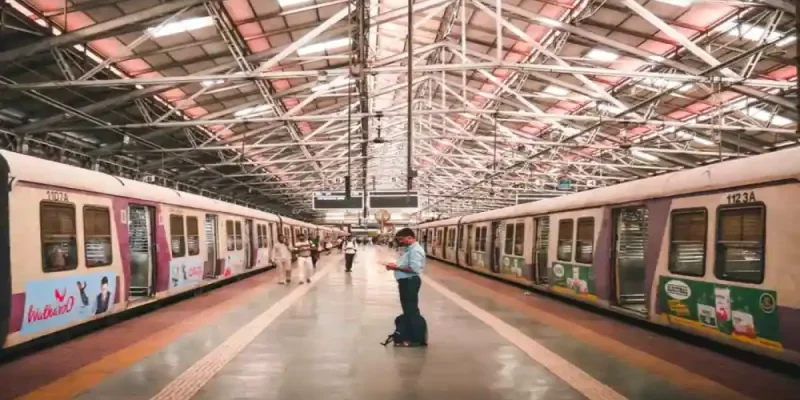
I arrived in Mumbai with a well-thumbed guidebook, a list of “must-see” neighbourhoods, and the deeply misguided confidence of someone who had read about the city rather than lived in it. Almost immediately, I had abandoned my itinerary entirely. My real experience came from something far more instructive: the Mumbai local train network, a 465-kilometre lifeline that carries over seven million passengers every single day.
The moment I stepped onto the Western Line at Churchgate during peak hour, I understood something no travel writer had prepared me for: Mumbai does not wait for you. The train pulls in, the doors open, and a human tide moves simultaneously in and out. There is no hesitation, no politely standing aside. You either come prepared, or you will be moved aside for an uncomfortable experience.
The geography makes sense from inside a compartment
It is difficult to understand the area of Mumbai as a city when viewed from the air, but when riding on a local train from south to north you can understand it entirely. When you ride the local train from Churchgate to Borivali, you see the city change through three distinct chapters: The grand colonial city of South Mumbai becomes the dense whir of Dadar, which becomes the quieter suburban community lifestyle of Bandra and Andheri. No tour bus or taxi ride could give you this continuity of motion, the local train does not go around Mumbai, rather through it.
Mumbai people are the point
The best evidence of the diversity and richness of Mumbai’s social fabric can be found in the way people share space inside the train compartments. Women can be found in ladies-only cars, frequently engaged in lively conversations, giggling, or buying from itinerant street vendors selling hair clips and jasmine garlands. In general cars, there are office workers, labourers, students and occasional tourists all sharing small amounts of space with much friendliness. In a recent incident, I observed two men engaged in an argument quickly dissolve their argument into a fit of laughter; in just two stops (roughly two kilometres). Mumbai is a land of explosive energy, heat and laughter!
It is also worth noting that the locals have a language of their own. A “fast local” doesn’t stop at every station. A “slow local” does. Getting on the wrong one because you were too embarrassed to ask is a rite of passage. I did it twice.
Stay location shapes the experience
The train network also taught me something practical: where you base yourself in Mumbai matters enormously. South Mumbai, with Churchgate and CST as its anchors, puts you close to the historic core comprising the Gateway of India, Colaba, and the grand old boulevards of Fort. Further north, Bandra West offers a more relaxed pace, well-connected but worlds apart in atmosphere. The right hotels in Mumbai will position you near a station, because the moment you tap into the local network, the entire city becomes accessible for the equivalent of loose change.
The unscheduled lessons of Mumbai
The times when I got it wrong resulted in some of the most incredible experiences. When I mistakenly exited the train at Mahim, instead of Matunga, I ended up spending a wonderful hour in an area that was not initially a part of my itinerary. Following a group of office workers through the neighbourhood led me to discover a wonderful local Konkani lunch stop, which they obviously already knew about.
The train also helped me understand how Mumbai relates to time in a way that is both serious and incredibly philosophical due to the pressure people experience about being on time. There is a constant flow of people running for trains that come every three minutes (or less), and having the experience of missing a train is not a big enough deal to cause concern. It is just part of life continuing to happen at the same fast pace as usual!.
The honest truth
Mumbai’s local trains are not comfortable by any conventional tourist measure. They are crowded, occasionally overwhelming, and require a certain willingness to surrender personal space entirely. However, the experience is far more authentic than a curated heritage walk or a breezy hotel rooftop view. If you want to understand what this city actually is, how it breathes, who it belongs to, and why its residents speak about it with such ferocious affection, buy a day pass and ride from Churchgate to Virar with your eyes open.











Comments