 By
By 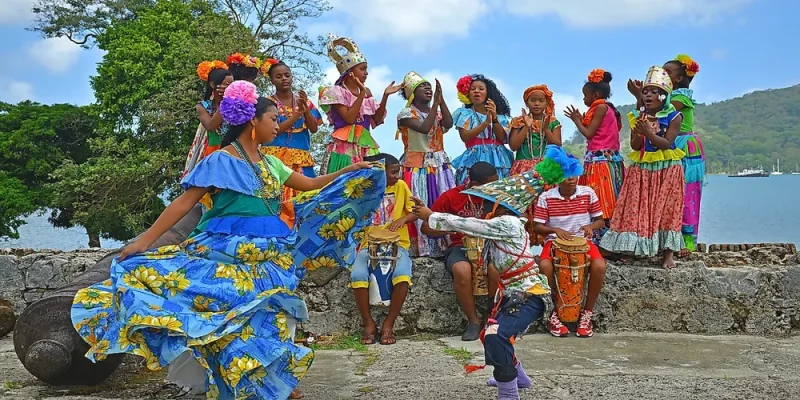
Fly from one Caribbean island to the next and you can go from a Spanish-speaking nation to a French one to a former British colony in the time it takes to eat a meal. Menus shift, official languages change, currencies reset, and even the architecture starts to look distinctly different – sometimes between islands that are barely visible from one another’s shores. Few regions in the world pack this much cultural variation into such a small geographic footprint. The reason traces back to centuries of colonial competition, forced migration, and the specific way European powers carved up the region.
A Sea Fought Over by Everyone
Starting in the late 1400s, the Caribbean became one of the most contested regions on Earth, as Spain, England, France, the Netherlands, Denmark, and Portugal all competed for control of individual islands, often trading them back and forth through wars and treaties for centuries. Unlike larger colonized regions where one power tended to dominate a broad contiguous territory, the Caribbean’s island geography meant colonial control was scattered and constantly shifting – a single island might change hands between European powers multiple times over a few generations, layering different languages, legal systems, and cultural influences on top of each other.
Language as a Living Map of Colonial History
The region’s linguistic diversity is a direct, still-visible record of this contested history. Spanish dominates in Cuba, the Dominican Republic, and Puerto Rico. French remains official in places like Martinique and Guadeloupe. English is standard in Jamaica, Barbados, and Trinidad and Tobago. Dutch persists in Aruba, Curaçao, and Bonaire. On top of these official languages, distinct Creole languages developed throughout the region – Haitian Creole, Papiamento, and Jamaican Patois among them – blending European colonial languages with West African linguistic structures brought over through the slave trade, along with Indigenous vocabulary that survived colonization.
The Deeper Layer: Forced Migration and Cultural Fusion
Colonial competition explains why different European cultures ended up scattered across the region, but the deeper cultural complexity comes from the forced migration of enslaved West Africans, who were brought to the Caribbean in the millions to work sugar and other cash crop plantations. African cultural traditions – in music, religion, cuisine, and language – didn’t just survive this displacement; they fused with European and Indigenous influences to create entirely new cultural forms unique to specific islands. Religions like Vodou in Haiti and Santería in Cuba, for instance, emerged from this fusion, blending West African spiritual traditions with Catholic imagery introduced by colonial powers.
Later waves of migration added further layers still. Indentured laborers from India arrived throughout the 19th century, particularly in Trinidad and Tobago and Guyana, bringing South Asian culinary traditions, religious practices, and eventually music that fused with existing Caribbean influences. Chinese and Lebanese merchant communities settled across multiple islands as well, adding yet more threads to an already complex cultural fabric.
Geography That Encouraged Separation, Not Integration
Unlike a mainland region where neighboring cultures gradually blend across land borders, the Caribbean’s island geography meant that cultural development on each island often happened in relative isolation from its neighbors, even when those neighbors were visible across a narrow channel of water. This physical separation allowed distinct island identities to solidify over generations, even among islands that shared the same colonial power. Jamaica and Barbados were both British colonies, for instance, but developed noticeably different culinary traditions, musical forms, and dialects, shaped by their own specific histories, geography, and population makeup.
A Region Defined by Difference
What makes the Caribbean unusual isn’t just that it has cultural diversity – plenty of regions do – it’s the sheer density of that diversity within such a compact geographic area. Few places allow a traveler to experience genuinely distinct languages, cuisines, religious traditions, and colonial histories across islands that might be visible from one another on a clear day. That density is part of what makes the region so compelling to explore broadly rather than choosing just one island and assuming it represents “the Caribbean” as a whole.
Because these cultural differences are so tightly packed geographically, seeing several distinct traditions in a single trip is more feasible in the Caribbean than almost anywhere else in the world. Caribbean cruises are built around exactly this kind of variety, moving between islands with entirely different colonial histories, languages, and culinary traditions within the same week – a kind of cultural range that would otherwise require multiple separate international flights to piece together independently.
For readers interested in a deeper academic look at how these cultures formed and interacted, research and publications from Caribbean studies programs at major universities offer detailed scholarship well beyond what a travel-focused overview can cover.
One Sea, Many Stories
The Caribbean’s cultural density is ultimately the product of centuries of upheaval – colonial competition, forced migration, and the specific isolating effect of island geography – compressed into a relatively small stretch of sea. Understanding that history doesn’t just add context to a trip; it reframes the entire region from a single tropical backdrop into dozens of genuinely distinct places, each shaped by its own specific and often difficult history, sitting remarkably close to one another.



Comments